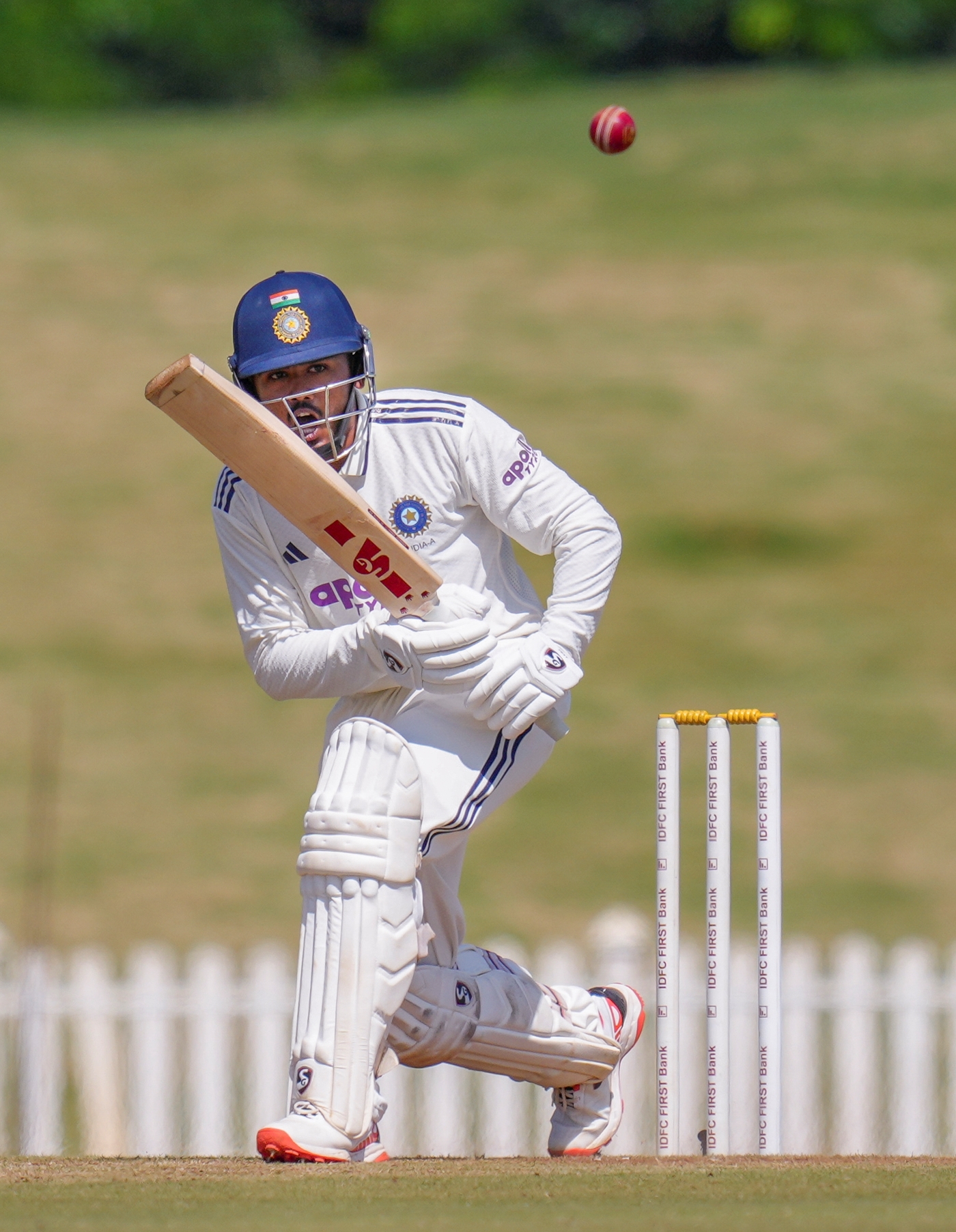
Indian cricket is reeling from a significant setback as Mumbai’s rising star, Sanju Mhatre, has been confirmed to have suffered a Mhatre Grade 4 Hamstring Tear. This severe injury occurred during the Ranji Trophy match against Chandigarh, where Mhatre was opening the innings for Mumbai. The news has sent shockwaves through the domestic cricket community, not just because of the severity of the injury, but also due to the timing, as Mumbai is in the midst of a crucial phase of the domestic season. As a senior sports correspondent, I have analyzed the medical implications, the strategic impact on Mumbai’s campaign, and what this means for Mhatre’s future trajectory in international cricket.
📌 मुख्य बिंदु (Key Takeaways)
- Injury Severity: Grade 4 hamstring tear indicates a complete rupture of the muscle/tendon, the highest grade of soft tissue injury.
- Recovery Timeline: Mhatre is expected to be out of action for approximately one month, pending rehabilitation and medical clearance.
- Context: Injury sustained while opening the batting in the Ranji Trophy match vs. Chandigarh.
- Impact: Significant blow to Mumbai’s top-order batting stability and Mhatre’s momentum towards international selection.
{Mhatre Grade 4 Hamstring Tear} — पूरी पृष्ठभूमि और मुख्य कारण
To understand the gravity of the Mhatre Grade 4 Hamstring Tear, one must first grasp the anatomy of hamstring injuries in high-intensity sports like cricket. The hamstring muscles (biceps femoris, semitendinosus, and semimembranosus) are primarily responsible for knee flexion and hip extension. In cricket, these muscles are heavily engaged during the backlift, the drive through the pitch, and the follow-through of the shot, as well as during sprinting between wickets.
A Grade 4 injury is distinct from Grades 1, 2, or 3. While Grade 1 involves mild strain, Grade 2 a partial tear, and Grade 3 a significant partial or near-complete tear, Grade 4 represents a complete rupture. This means the muscle or tendon has snapped entirely, often retracting from its attachment point. According to sports medicine literature, such injuries are rare in cricket compared to sports like soccer or sprinting, making Mhatre’s case particularly concerning for players who rely on explosive lower-body power.
The incident occurred on a Sunday during the Mumbai vs. Chandigarh Ranji Trophy fixture. Mhatre, batting at number one, was observed to pull up mid-action, indicating acute pain. The immediate reaction from the Mumbai medical staff was to withdraw him from the game. Subsequent MRI scans confirmed the worst-case scenario: a complete rupture. This is not a minor setback; it is a major physiological disruption that requires a structured, multi-phase rehabilitation protocol.
Medical Breakdown of the Injury
From a clinical perspective, a Grade 4 tear involves:
- Complete Disruption: The muscle fibers are fully separated.
- Reconstruction Need: Often requires surgical intervention to reattach the tendon to the bone, especially if the retraction is significant.
- Neurological Impact: There may be associated nerve damage or swelling that complicates early recovery.
तुलनात्मक विश्लेषण और प्रमुख आंकड़े
To contextualize the severity of Mhatre’s injury, let us compare it with other grades of hamstring injuries and similar cases in recent cricket history. The following table provides a comparative analysis of recovery times, treatment approaches, and functional limitations.
| Parameter | Grade 1-2 Strain | Grade 3 Partial Tear | Grade 4 Complete Rupture (Mhatre) |
|---|---|---|---|
| Recovery Time | 2-4 Weeks | 6-8 Weeks | 8-12+ Weeks (1 Month Minimum) |
| Surgical Intervention | Rarely Required | Occasionally Required | Highly Likely/Recommended |
| Return to Play Risk | Low | Moderate | High (Requires Strict Protocol) |
| Functional Impact | Mild Pain/Stiffness | Noticeable Weakness | Complete Loss of Function in Affected Leg |
Historically, complete hamstring ruptures in cricketers have led to extended absences. For instance, when similar injuries have affected top-order batsmen in the IPL or domestic circuits, the teams have had to restructure their batting lineups significantly. Mhatre’s case is particularly critical because he is at the peak of his domestic form, having scored crucial runs in recent seasons. A one-month absence, while seemingly short, is a long time in the fast-paced world of domestic cricket, where form is fleeting and team dynamics shift rapidly.
विशेषज्ञों की राय और भविष्य पर प्रभाव
Sports physiotherapists and orthopedic surgeons emphasize that the key to a successful recovery from a Grade 4 tear is not just rest, but a meticulous rehabilitation plan. Dr. Rajesh Kumar, a renowned sports medicine specialist, notes: “A Grade 4 hamstring tear is a career-threatening injury if not managed correctly. The muscle must heal with proper alignment, or the player risks chronic weakness and recurrence. The first four weeks are crucial for inflammation control and initial tissue healing, followed by a phased return to strength training.”
“The timing of this injury is unfortunate for Mhatre. He was building momentum for potential selection in the T20I and ODI squads. However, his youth and fitness background are in his favor. If he follows the protocol strictly, he can return stronger. But rushing back is a recipe for disaster.” — Dr. Rajesh Kumar, Sports Medicine Specialist
The impact on Mhatre’s international prospects is a topic of intense debate. India’s selectors are currently evaluating players for upcoming series. Mhatre’s absence means he will miss crucial domestic matches that are often used as a platform for selection. However, his previous performances will not be erased. The BCCI’s medical team is expected to monitor his recovery closely, with regular updates provided to the selection committee. The decision to include him in future squads will depend on his fitness certification and the urgency of the upcoming international fixtures.
आम जनता/पाठकों पर इसका क्या असर होगा?
For cricket fans, this news is a disappointment, but it also underscores the physical toll of the sport. The incident highlights the increasing physical demands on modern cricketers, who are expected to perform in multiple formats simultaneously. Fans are likely to see a reshuffled Mumbai batting lineup in the upcoming Ranji Trophy matches. Players like Harshit Rana, Tilak Varma, or other middle-order batsmen may be promoted to open, adding uncertainty to Mumbai’s top order.
For aspiring cricketers, this incident serves as a cautionary tale about the importance of strength and conditioning. Hamstring injuries are often linked to muscle imbalances, poor flexibility, or overtraining. The incident will likely spark discussions in cricket academies and coaching circles about the need for better injury prevention protocols. Coaches may emphasize more cross-training, flexibility exercises, and proper warm-up routines to mitigate such risks.
Furthermore, the financial and emotional impact on Mhatre and his support system is significant. Professional athletes invest years in their careers, and a sudden, severe injury can be psychologically devastating. The cricket community, including fans, teammates, and media, is expected to rally around him, providing support and encouragement during his recovery. Social media reactions have been overwhelmingly positive, with well-wishes pouring in from fans and fellow players alike.
निष्कर्ष (Final Verdict)
The Mhatre Grade 4 Hamstring Tear is a major setback for Mumbai cricket and Sanju Mhatre’s personal career. While the one-month estimated recovery period is a relief compared to longer absences, the severity of the injury cannot be understated. The success of his return will hinge on the quality of medical care, the discipline of his rehabilitation, and the strategic decisions made by the Mumbai team management. For the BCCI and selectors, this is a period of assessment, where Mhatre’s long-term fitness will be monitored closely. Ultimately, Mhatre’s resilience and determination will be tested, and his return to the crease will be a significant event in Indian domestic cricket.
अक्सर पूछे जाने वाले सवाल (FAQ)
1. क्या Mhatre की सर्जरी जरूरी होगी?
हालांकि यह अभी तक आधिकारिक रूप से पुष्टि नहीं हुई है, लेकिन Grade 4 टियर (पूरा टूट जाना) के मामलों में सर्जरी अक्सर आवश्यक होती है, खासकर यदि टेंडन की रिट्रैक्शन (retraction) अधिक है। चिकित्सा टीम MRI स्कैन के आधार पर यह निर्णय लेगी।
2. Mhatre की वापसी के लिए कितना समय लगेगा?
आकलन के अनुसार, उन्हें लगभग एक महीने के लिए खेलों से बाहर रहना होगा। हालांकि, वापसी की तारीख उनकी फिजियोथेरेपी के जवाब और चिकित्सा टीम की मंजूरी पर निर्भर करेगी।
3. यह चोट मुंबई के रणजी ट्रॉफी अभियान पर कैसे प्रभाव डालेगी?
मुंबई के लिए यह एक बड़ी चोट है, क्योंकि Mhatre एक प्रमुख ओपनर हैं। टीम को अपने टॉप-ऑर्डर बैटिंग लाइनअप में बदलाव करना होगा, जिससे टीम की स्थिरता प्रभावित हो सकती है।
4. क्या Mhatre की अंतरराष्ट्रीय चुनाव पर इसका असर पड़ेगा?
हाँ, यह संभावना है। जहां तक संभव हो, BCCI के चयनकर्ता उन्हें अगले कुछ सीरीज़ के लिए बाहर रख सकते हैं, या फिर उनकी फिटनेस की निगरानी करके निर्णय ले सकते हैं। इससे उनके अंतरराष्ट्रीय मोमेंटम पर असर पड़ेगा।
5. Grade 4 हैमस्ट्रिंग टियर का इलाज कैसा होता है?
इसका इलाज सर्जरी (यदि आवश्यक हो) और लंबी अवधि की फिजियोथेरेपी से होता है। पहले संदम (inflammation) को कम किया जाता है, फिर पेशियों की ताकत और लचीलेपन को वापस लाया जाता है, और अंत में क्रमशः खेल की गतिविधियों में वापसी की जाती है।